 Bring magic into your life
What is a Still Air Box (SAB)
A still air box is an enclosed workspace that is commonly used in mushroom cultivation to maintain an almost sterile environment during the inoculation of substrates with mushroom spores or spawn.
The SAB is typically made of transparent plastic or acrylic and can be built in various sizes depending on the needs of the cultivator. The box has two holes or ports that allow for the placement of your arms, which are used to manipulate the materials inside the box.
A SAB enables you to work in a clean environment with minimal contaminants, which is vital during the first few cultivation steps, from spore germination to inoculating grain spawn. You want to prevent bacteria, molds and competing fungi spores from contaminating your growing environment and destroying your grow.
How to make a Still Air Box
To build a Still Air Box, you will make two 4-6" inch holes in a 60-100 quart clear plastic box using a large heated can. Yes, you got that right. It's just a big, clear, plastic tub, turned up-side-down, with two holes in it.
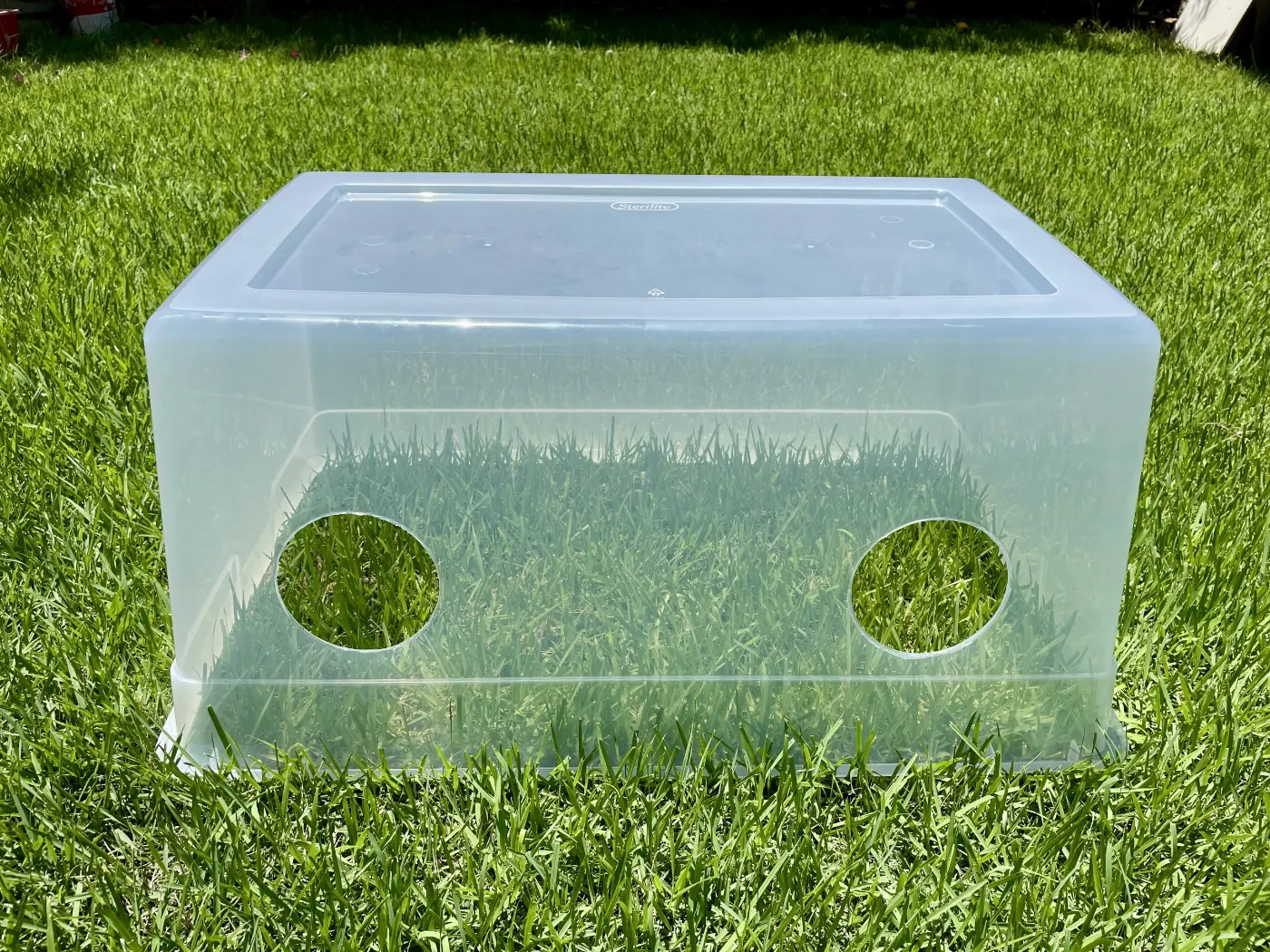
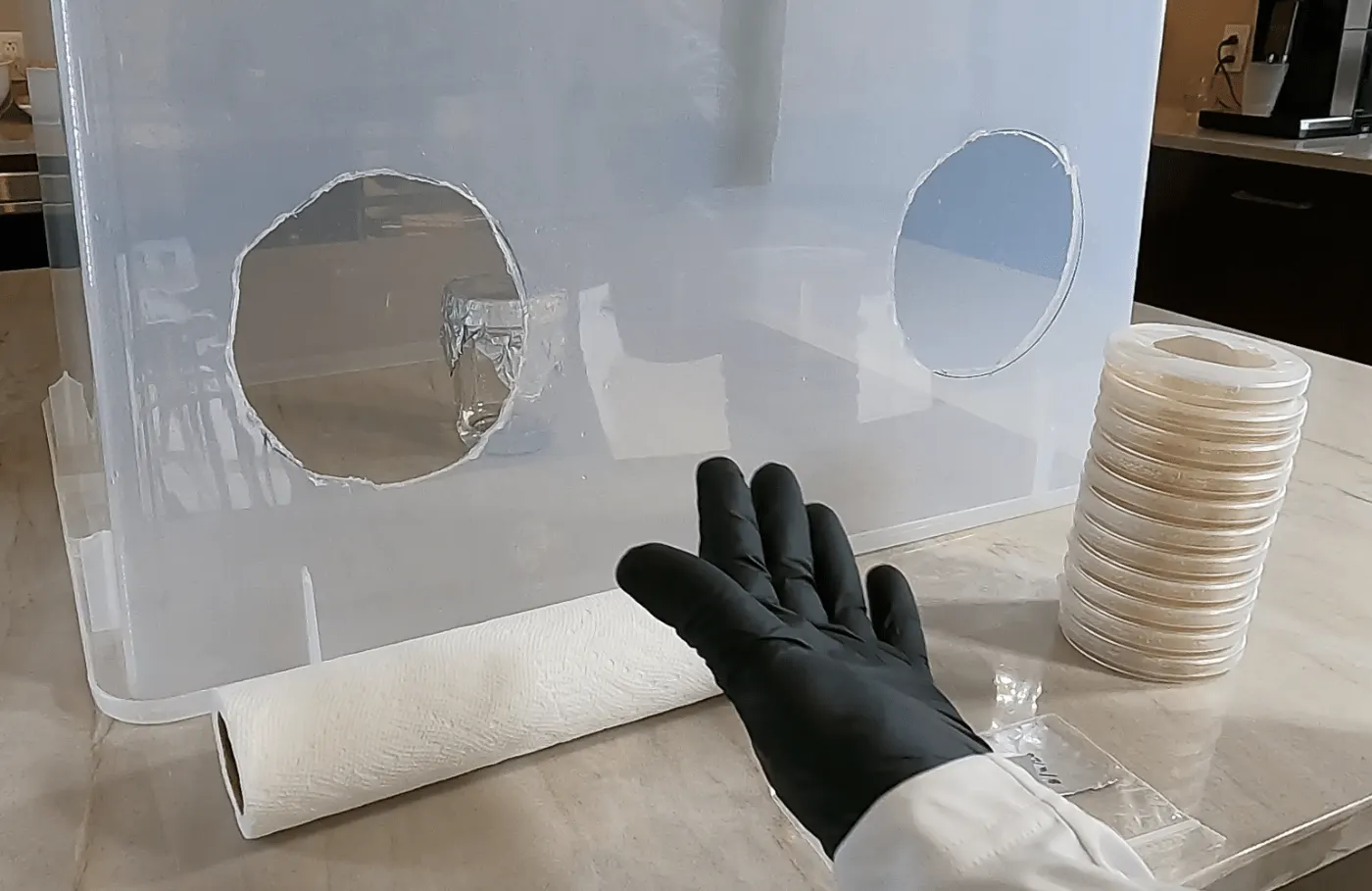
Building a DIY Still Air Box for Mushroom Cultivation
- Time required for modification: 20 minutes
- Work in a well ventilated area and avoid breathing in any fumes.
- Be careful of molten plastic dripping from the can
- Open windows and doors where possible.
- Don't apply force when cutting out the circles with a knife. These tubs crack easily.
Video Tutorial : Building a SAB for Clean and Sterile Work
The video markers above 👆🏼correspond to the the various Steps in this Unit. Click on them to skip to a Step.
Toxic Objects Alert! Make sure to work in an open or well ventilated space. Open some windows and avoid breathing in any smoke. The fumes coming off the molten plastic may be toxic. General Info about Still Air Boxes The working theory of a SAB is that you perform all your clean work inside of it. As long as the SAB and its contents are clean, and there is minimal air movement inside the SAB while you are working, you have a good chance of avoiding contamination. The SAB is a very different concept than a glove box, in which the whole system remains closed. For this reason, while working with a SAB, you want to work in a very clean room, close all windows and AC and have minimal airflow around you in general.
Mark the Height and Spacing for the Arm Holes on the Box
Remove the SAB lid and place the SAB upside down on your table or work surface.
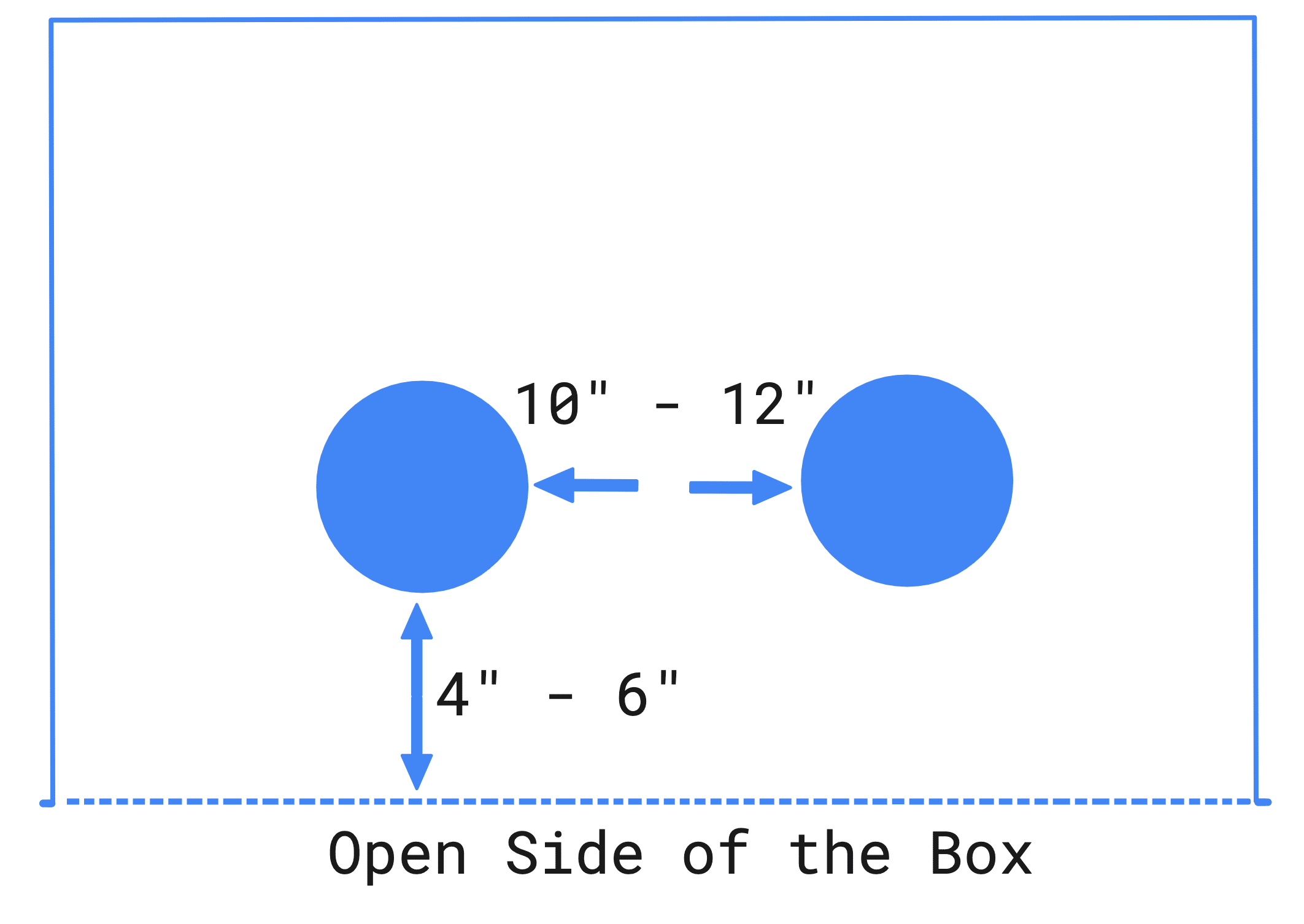
On the broad side of the SAB, take two measurements and mark them with a sharpie: The height for your holes (4-6 inches up) and the distance between the holes (10-12 inches apart), as shown in the diagram on the right.
Positioning the holes correctly will give you comfortable access to work inside the SAB.
Cut out the Two Holes on the Broad Side of the Box
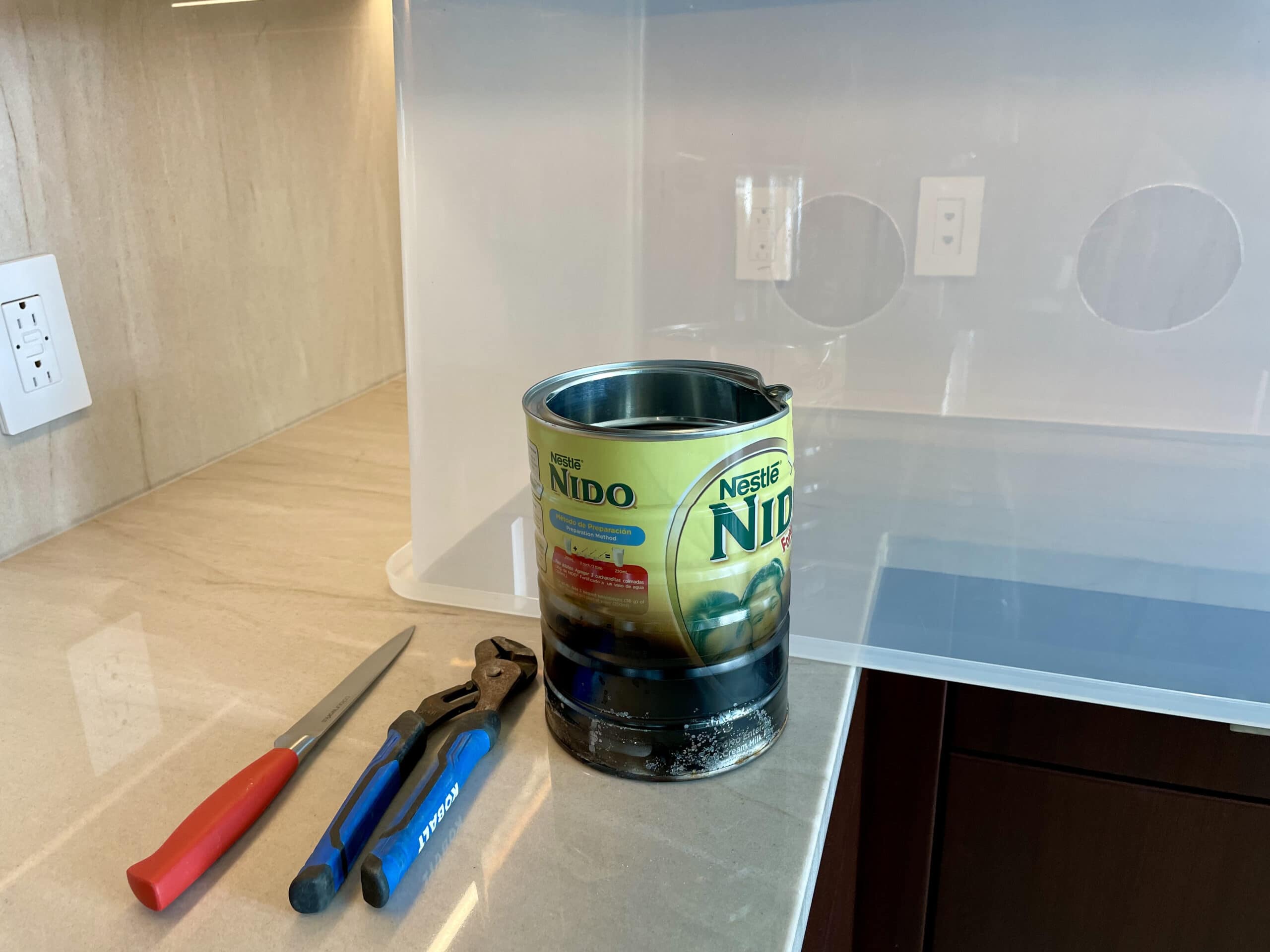
Place an empty, dry metal can on the gas stove and turn on the heat. Allow the metal can to heat for a few minutes and then carefully secure the hot can by clamping on to the top of the can with the vice grip or pliers. Apply the hot part of the can to one of the hole markings you made earlier, and gently push it through. If the metal is hot enough, it should make a clean hole through the plastic. If the hole is not large enough for your forearm to go through it, you can repeat the process above and simply expand parts of each hole by cutting out little crescents around it with the hot can. The arm holes do not have to be perfectly circular.
Next Unit: Building a Monotub for mushroom cultivation. The next module will walk you through building your own monotub, which is the container used to incubate and fruit the mushrooms.